How does task democracy relate to current transition theory?

Year
2025
Version
250116
Maintainer
Peter Bootsma

Mainstream transition theory predicts productive conflict between a declining old pattern and an emerging new pattern. It does not challenge the liberal democratic paradigm, other than proposing improved citizen participation. Task democracy proposes a more radical upgrade of liberal democracy that may reduce transition conflict, by installing negotiation platforms for task groups.
Mainstream transition theory emphasises conflict between upcoming niche solutions for societal problems and declining patterns defended by regime players (e.g, Rotmans, 2021). Over time, the innovation wins and can be consolidated. An example of the application of this theory is the climate case in which Urgenda successfully urged a court ruling that forces the state to do more to combat climate change. 
Paul Frissen sees historicism in this transition thinking, a doctrine of historical necessity. He states this leaves no room for other views: 'They are a vanguard that knows the future, points the way to it and does not shy away from coercion, in the form of action and court rulings. They want a new beginning, after which the circle is closed' (Frissen, 2023). 
Task democracy, like transition thinking, starts from scientifically proven sustainability crises, but also takes the plurality of society as a starting point. Task democracy then offers a method of political decision-making for social task division in society wide transition projects. This decision-making leaves room for all views and for deliberation. The outcome is not fixed but is constantly redetermined. The right to vote is not distributed equally among all citizens, but among five task groups that need each other and in which citizens are represented in different ways.

Regional Panel on Climate Change North-Netherlands (RPCC/NN)

A regional panel on climate change that may repesent science in a task democratic platform
Year
2026
Version
261109
Maintainer
admin

RPCC/NN, established in 2026, is a open an independent group of scientists in the North of the Netherlands, engaged in regional climate change research and familiar with or directly involved in IPCC. Its purpose is to contribute to an accelerated regional response to the climate change urgency. To achieve this, RPCC/NN answers questions from regional society about climate change, adaptation and mitigation. The panel also publishes articles and policy advice and gives guest lectures and workshops. Furthermore, wthe panel is a sounding board for IPCC, to close the information and communication loop within the science community.
The relevance to task democracy is that one or more scientific panels like RPCC/NN may represent science in a task democratic platform. The choice of panels may depend on the nature of the platform. For instance, in a task democratic chamber of a municipal council (a ‘transition chamber’), three panels may participate, representing social, ecological and economic science. In a task democratic food council, science may berepresented by specialised members of these three panels may participate, or by specialised panels for agriculture and food. 

Panel website: https://www.rpccnn.nl

Vinkmobiel

A task democratic neighbourhood taxi project
Year
2016
Version
261109
Maintainer
Peter Bootsma

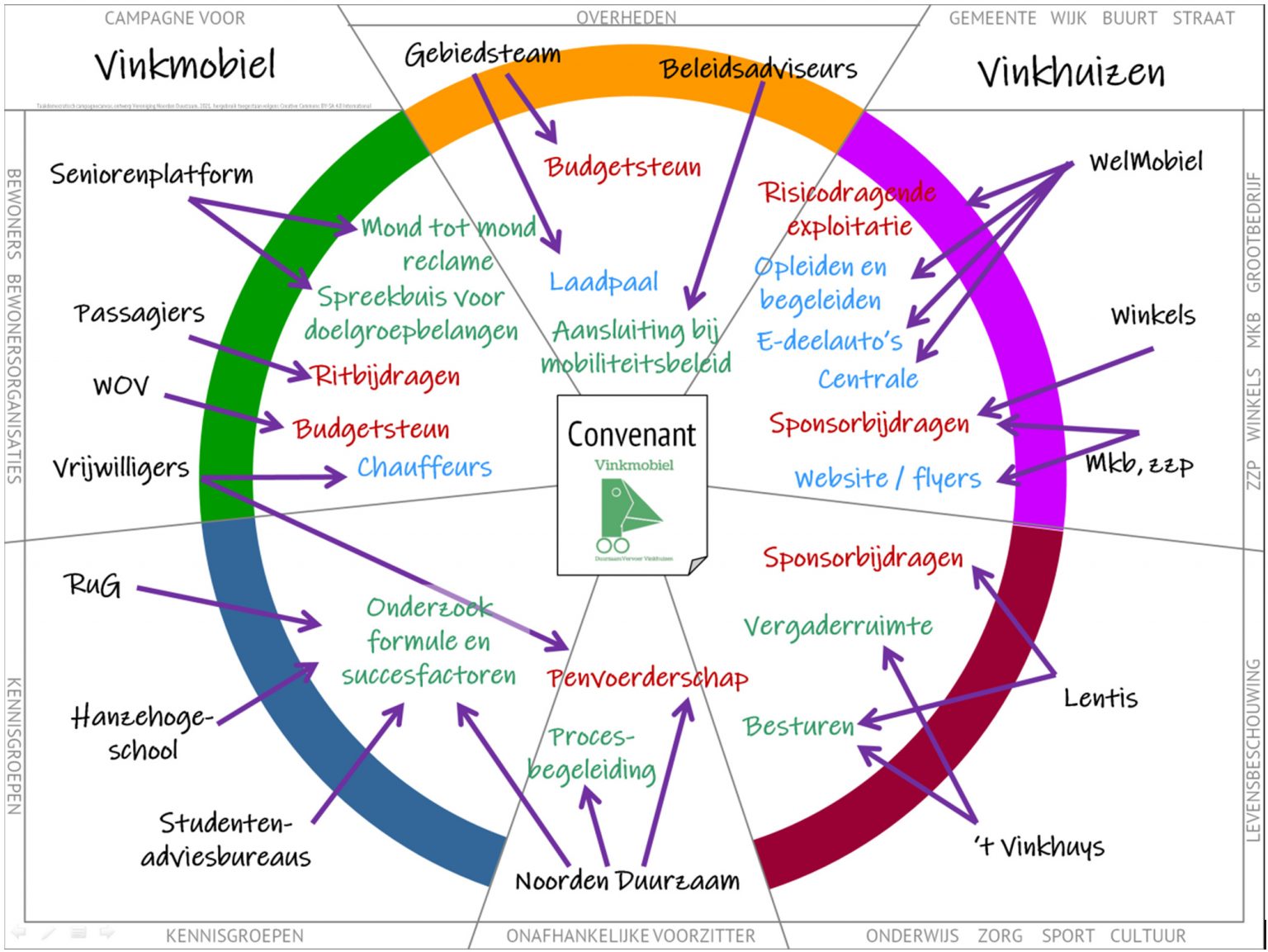
Vinkmobiel is een samenwerking van organisaties van de wijk Vinkhuizen, aangevuld met experts van buiten. Het project loopt sinds 2016.

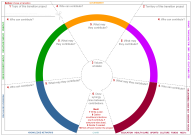
Onderstaand diagram laat de vijf taakgroepen zien die in het project deelnemen: wetenschap, bewoners, overheid, bedrijven en voorzieningen. Vanuit elke geleding worden bijdragen geleverd aan Vinkmobiel. De belangrijkste daarvan zijn weergegeven door de pijlen naar de binnencirkel. De bijdragen versterken elkaar en tellen op naar een goed werkende dienst voor kleinschalige wijkmobiliteit. 

Parallel aan Vinkmobiel zijn vijf vergelijkbare projecten ontstaan in andere wijken van de gemeente Groningen. 

https://www.vinkmobiel.nl


Schelligheheert

A project to create a community owned farm complex in Groningen, The Netherlands
Year
2023
Version
261109
Maintainer
Peter Bootsma

Update October 2026: In a public sales procedure, the Province of Groningen sold the 'Schelligheheert' property to a commercial party. While the foundation’s bid was in line with market value and met all procedural requirements, the winning party submitted a bid that was €500,000 higher. The foundation expressed its disappointment, noting that the province had previously pledged to create favorable conditions for civic initiatives. The procedure stipulated that price would account for 20% of the bid evaluation, while quality would account for 80%. However, the criteria for achieving the maximum quality score proved to be limited to small-scale investments. Both the foundation and the winning party achieved the maximum score for quality. The foundation filed a complaint with the Provincial Council, requesting an intervention, an investigation, and the implementation of measures to prevent such a situation from recurring in the future.

Previous project description: The Province of Groningen owns the former Schelligheheert dairy farm and its 60 hectares of agricultural land, and wishes to divest itself of this property. The Schelligheheert Foundation and partners aims for sustainable redevelopment as a common, with focus on landscape development, agriculture for 250 households, horticulture, heritage, culture, residential use, road safety and compensation for the 380 kV high-voltage power line that was built across the property. The bidding closes in September 2026. 

For governance, a task democratic model was chosen and enshrined in the statutes. Equal supervisory authority is granted to five involved groups: science, citizens, government, businesses, and non-profits. Science is represented by a multi-disciplinary scientific panel. Citizens may be represented by the nearby village associations. Government may be represented by the municipality. Businesses may be represented by commercial users of the property. Non-profits will be represented by educational and other institutes using facilities on Schelligheheert.

The draft statutes were written in 2022. At that time the plan was to compose the executive board from five task groups, similar to the supervisory board. Lateron, this was abandoned in favor of a more entrepreneurial and competence based board, while maintaining the task democratic composition of the supervisory board.

https://www.schelligheheert.nl


Subscribe to